
Is a variable speed pool pump worth it? Three years with my Pentair, and my real electric bill
Some links below are Amazon affiliate links. If you buy through one, I may earn a small commission at no extra cost to you. As an Amazon Associate I earn from qualifying purchases. It never changes what I recommend.
The decision got made for me on a hot afternoon in July. My pool pump, a single-speed Century that had been roaring away out there since before we bought the house, just quit. Middle of summer, Southern California, two kids who treat the pool like a second living room. A dead pump is not a “get to it next month” problem. The water starts to turn on you fast.
Around the time I started handling the pool chemicals myself, I had asked my neighbor how his pool guy was working out. He told me he had just replaced his own pump and recommended the one he went with. So I called his guy, asked for the same pump my neighbor had, and asked how fast he could get it in.
The pump died, and the choice was mostly made for me
Here is something I did not know at the time. I could not have just dropped in another cheap single-speed even if I had wanted to. A 2021 federal Department of Energy rule requires any pool pump over 1.0 total horsepower to be variable speed. My old one was bigger than that, so a like-for-like single-speed replacement was not really on the menu anymore. The choice had already been narrowed down before I made a single phone call.
That turned out to be fine, because I wanted a variable speed anyway, and its value is the one thing everyone in the pool world agrees on. I have been trying to cut electricity use across the whole house, and after owning a pool for a few years I had realized one of the biggest costs is running the pump motor eight to ten hours a day. A variable speed costs more up front, but it saves you a fortune in electricity over the years. I had been hearing that for a decade. Now I was going to find out, because I kept the receipts.
What went in was a Pentair IntelliFlo3 VSF. Installed, all in, one line on the invoice: $2,160. That was July 26, 2023, so as I write this I am coming up on three years of living with it, and three years of data.
What three years of my data shows
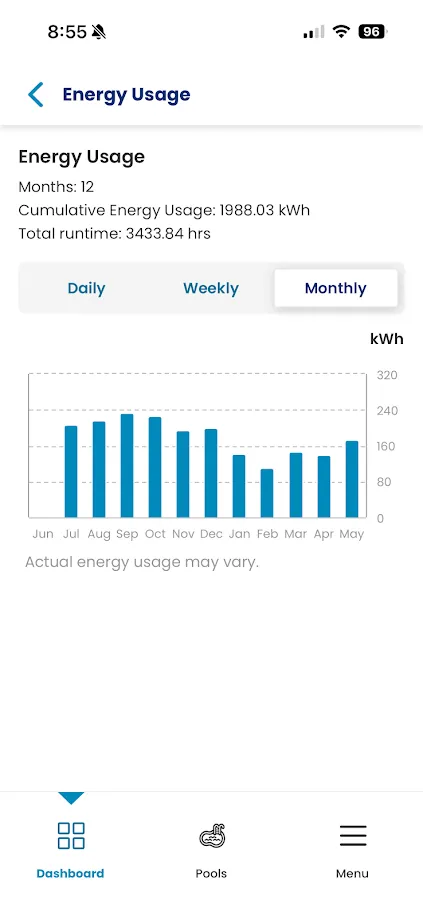
Let me give you the number that matters, straight off the Pentair app. Over the last twelve months, the pump used 1,988 kilowatt-hours. It ran for 3,434 hours to do it. That is almost nine and a half hours a day, every day, sipping an average of about 580 watts.
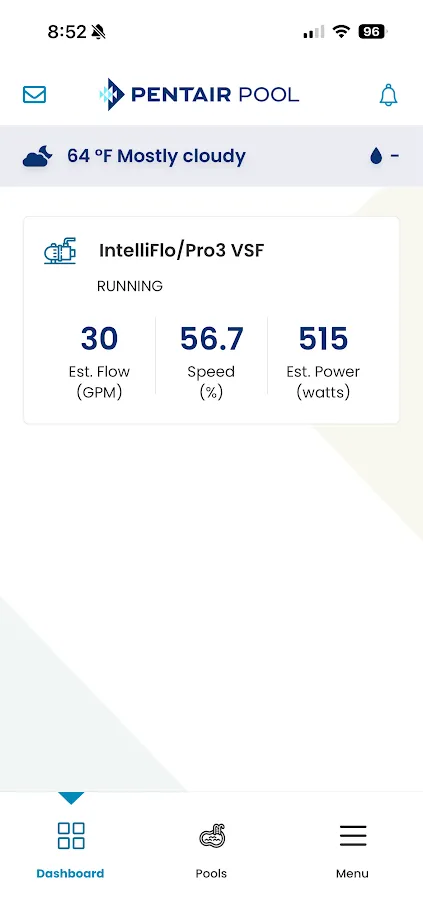
To put 580 watts in perspective, catch it running at a low filtering speed and the app shows it pulling around 515 watts, roughly what a couple of desktop computers draw.
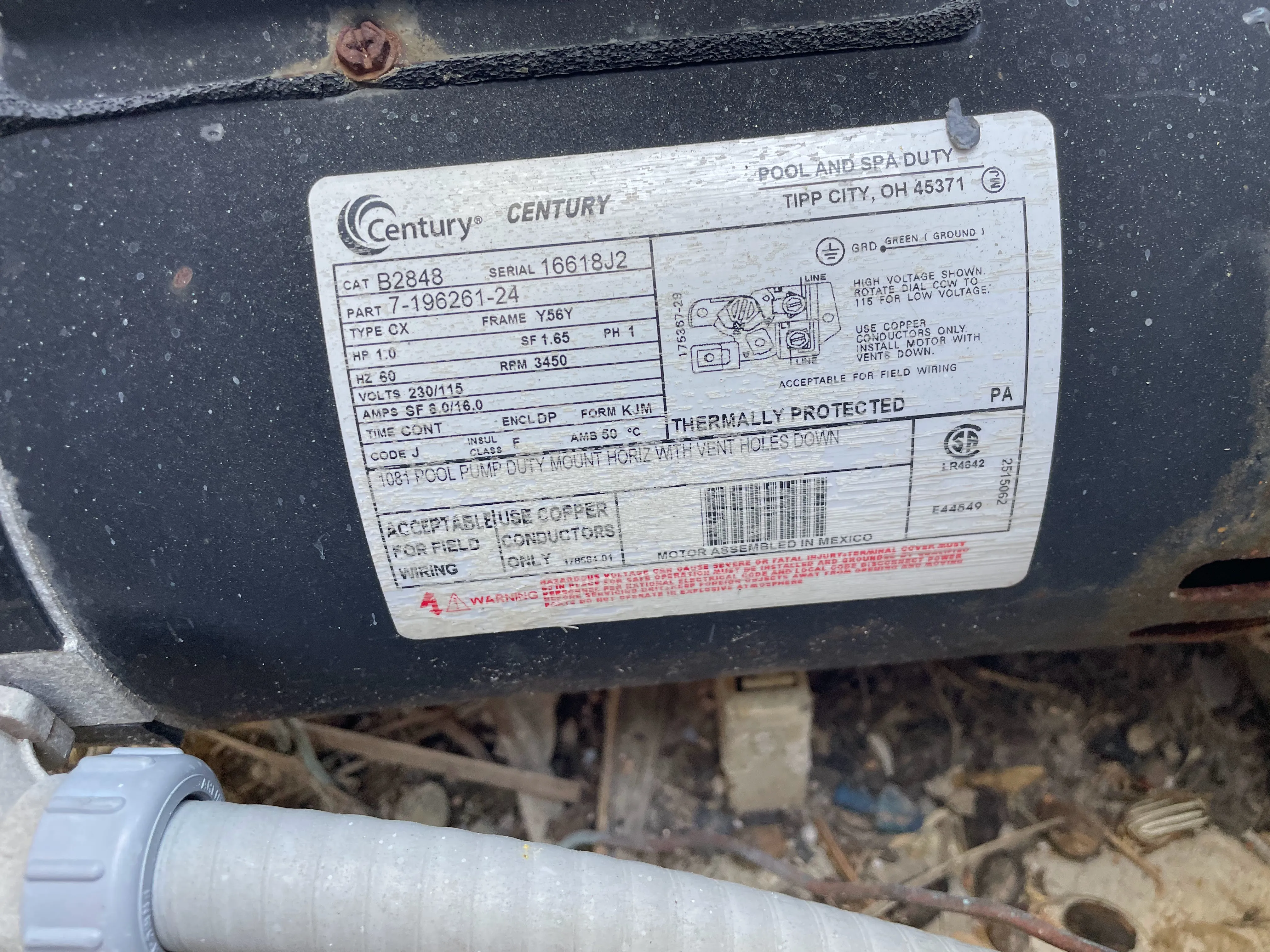
My old single-speed Century had exactly one setting: full blast, 3,450 RPM, the entire time it was on. A motor like that pulls somewhere in the neighborhood of 2,000 watts whenever it runs. To push the same water through the same pool, it burned something like two to three times the electricity, because it did not know how to do anything gently.
That is the whole trick of a variable speed pump, and it is backwards from what you might guess. It saves energy by running longer, not shorter. A single-speed pump sprints for a few hours at full power. A variable speed pump jogs all day at a sliver of the power, and slow and steady moves more water, which is the whole point of a pump, for less electricity by a wide margin.
The part your electric bill knows and the brochure does not
Here is the piece homeowners need to be aware of. When your pump runs matters, not just for keeping algae from growing, but because of how your electricity provider prices the day. You may need your real electric bill to see it. How much power the pump uses is only half the savings. When it uses that power is the other half.
I am on Southern California Edison’s TOU-D-PRIME plan, which means my electricity costs wildly different amounts depending on the hour. My own bill lands at about 26 cents a kilowatt-hour during off-peak hours and about 56 cents during the 4 to 9 pm peak. That is more than double for the exact same electricity, charged for nothing more than using it at the wrong time of day.
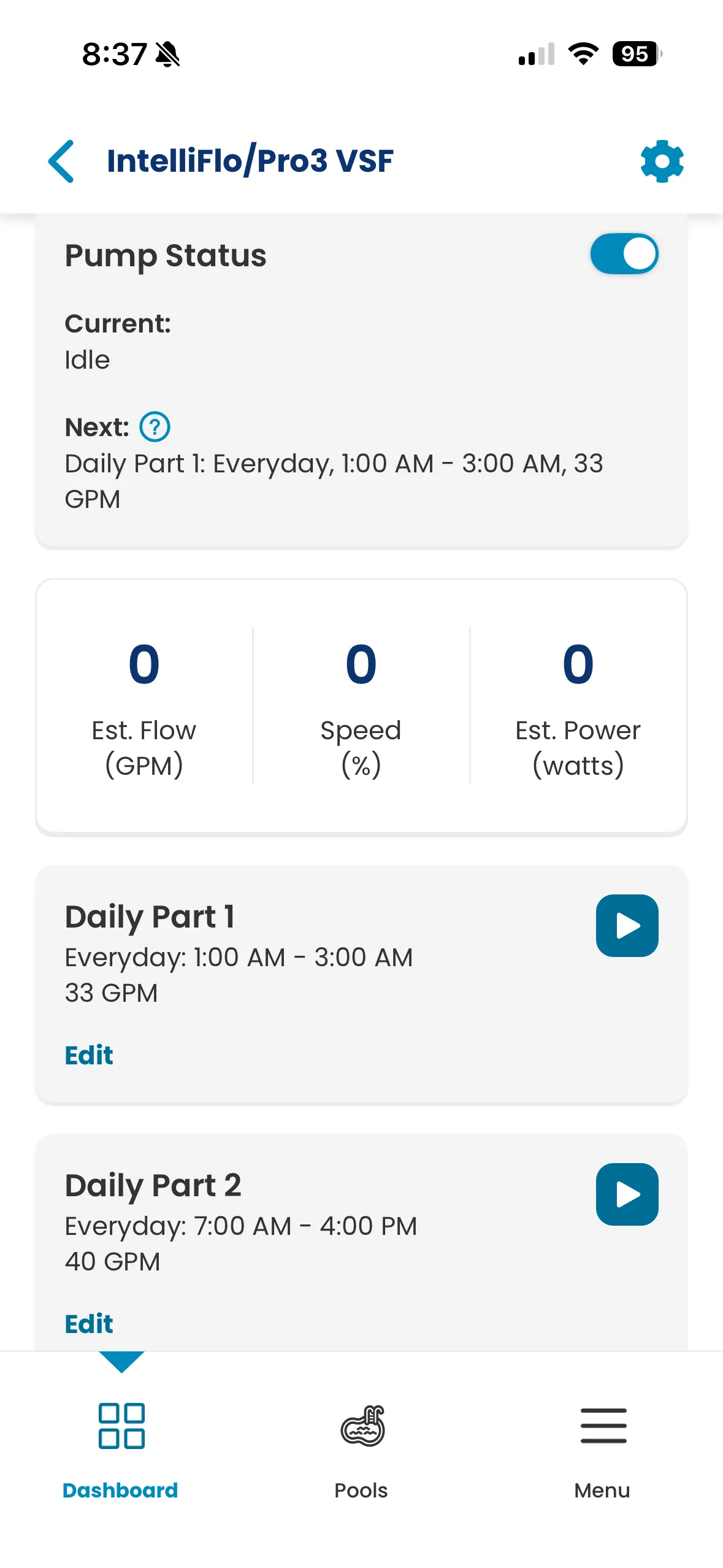
I have the pump scheduled for a short cycle from 1 to 3 am, and the main run from 7 am to 4 pm. Both of those sit entirely inside the off-peak window, and the pump shuts off at 4 pm, right as the expensive peak begins. It never runs during the priciest five hours of the day.
And the daytime block does one better. From 7 am to 4 pm my solar panels are producing, so most of that run is powered by my own roof instead of the grid. Between the panels and net metering, the real cost of the biggest chunk of my pump’s day is close to nothing.
The savings, for me, stack three deep: a variable speed motor that uses a fraction of the power, running during the cheapest hours, and mostly on my own sunshine. A single-speed pump on a timer, grinding at full power, can move just as much water in fewer hours. But it uses far more electricity to move that water, and keeping algae down is really about circulating the water over more hours, not just the total amount you push through.
So did it save money?
Let me try to put honest dollars on it. At my off-peak rate, running the new pump entirely on grid power would cost roughly $520 a year. The old single-speed, moving the same water, would have used somewhere around 5,000 kilowatt-hours a year and likely more in summer, which even at the off-peak rate is well over a thousand dollars a year. Call the difference roughly a thousand dollars a year. Against the $2,160 I paid, that is a payback of a little over two years, and the pump is well past that point now, quietly banking the difference.
I want to be straight that the old-pump figure is an estimate. It died, so I cannot pull its exact usage the way the app hands me the new one’s. But even being generous to the old pump, the new one wins clearly.
The stuff I notice
The money is the headline, but it is not what I notice day to day. That is the quiet.
My old pump announced itself. You could hear it from the patio, a constant industrial drone that was just part of the backyard’s soundtrack. The IntelliFlo3 at its normal filtering speed is genuinely hard to hear from a few feet away. It just does its job without shouting about it.
The app is the other quiet upgrade. I have it set with a handful of programs: the two daily filtering runs, plus a Quick Vacuum, a Jacuzzi cycle, and a Quick Clean I can fire off from my phone. When I want the jacuzzi, I tap a button instead of walking out to a dial. None of that is life-changing, but three years in, I use it all the time and I would miss it.
The honest downsides
Now the downsides, because there always are some.
It costs more up front, full stop. If your pool pump is single-speed and running fine, the federal rule does not force you to tear it out. But I might still nudge you toward it. You can wait until it dies, like mine did, and let the choice make itself. The thing is, prices only keep climbing. Here in Southern California, electricity has kept going up and so have the units themselves, so pulling the trigger sooner rather than later can actually save you money. If those extra dollars matter to you, it is worth looking into before your old pump forces the issue.
A variable speed pump saves money only if you set it up to run slow. The whole advantage lives in those low-RPM hours. Spend the twenty minutes to program it low and long. That is where the savings are.
Did it work?
Worth it. Three years, about a third of the electricity, most of it running on my own solar in the cheapest hours of the day, and a backyard that is finally quiet. It paid for itself in a little over two years and has been printing savings since.
The one honest caveat is that the timing was not mine to pick. My old pump died and forced the decision, and the federal rule meant variable speed was the only real option anyway. But I had wanted one for the energy savings already, so circumstance just pushed me to do sooner what I would have done eventually. Handed the same decision on purpose, I would make the exact same call. If your old pump is limping, do not wait for the emergency the way I did. And when you put the new one in, take the twenty minutes to run it slow. That is the whole game.
Joe out.